
Ever wonder who really created the lemon squeezer you use today? Its origins are more touch-and-go than a single inventor, stretching back to ornate Turkish ceramic tools used for sherbet.
Over time, many inventors refined the design, leading to the versatile tool most of us rely on now.
Keep reading to see how this simple kitchen aid evolved over centuries.
The Oldest Known Squeezers: 18th-Century Ceramic Finds in Turkey
The oldest known examples of lemon squeezers are 18th-century ceramic pieces from Kütahya, Turkey. These handcrafted tools showcase exceptional ceramic craftsmanship rooted in Ottoman tradition. Each piece comprises a shallow bowl with a hollow, perforated central cone. When you press a lemon half against it, the juice doesn’t pool inside; instead, it channels through the cone’s internal perforations and drains from the base. Artisans decorated these devices with cobalt blue, bole-red, and floral vine motifs, transforming a simple utensil into a piece of art. Unlike mass-produced modern tools, these ceramic squeezers were handcrafted and likely reserved for elite households. They were specifically used for preparing sherbet, a popular Ottoman beverage. Their intricate internal design not only made squeezing more efficient but also highlighted the artistry and cultural significance of everyday kitchen tools in that period. Modern electric juicers, however, offer a faster alternative for those who want a dedicated machine for orange juice. For those who prefer effortless ways to juice a lemon without any tool at all, modern methods like hand-squeezing or using a fork can achieve similar results with less cleanup. Similarly, modern drinkware enthusiasts often look for the perfect fit when choosing accessories like handles for their large tumblers.

DURABLE ALUMINUM: This lemon squeezer features durable aluminum construction with nine point eight four inch length and three point one five inch width, providing optimal leverage for maximum citrus extraction from lemons, limes, and other citrus fruits

Product Specs: This ceramic manual juicer measures 6.5 x 5.1 x 1.2 inches and weighs 0.62 lbs, compact and lightweight for easy handling and storage.

Ditch the Plastic, Embrace Pure Flavor: Tired of that lingering plastic aftertaste? Our ceramic lemon squeezer is crafted from high-grade ceramic that is completely non-porous. Unlike plastic alternatives that absorb odors and stains, this ceramic manual juicer bowl keeps your juice pure and fresh. Experience the authentic, fresh taste of your fruit
The First U.S. Patent: Lewis Chichester’s 1860 Cast Iron Design
Lewis Chichester’s 1860 cast-iron lemon squeezer was purely functional rather than decorative. Its pincer-shaped form resembles a hand-operated press, not a modern citrus reamer. The device relied on cast iron to create a simple, economical, and durable implement, as detailed in Patent No. 28,967. Designed to make juicing easier at home, it aimed to reduce the force needed to extract juice. This patent marks the earliest U.S. milestone in fruit-juice extraction, coming well before the patent boom of the late 19th and early 20th centuries. It proves that innovation in kitchen tools was already evolving long before the popularization of modern reamers. Unlike modern options like top shaker bottles with storage compartments, Chichester’s design focused solely on raw juicing power.
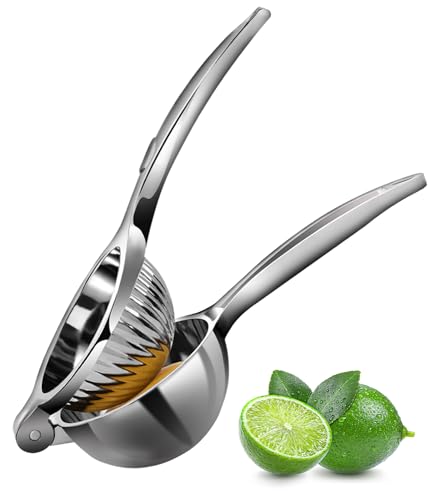
GET ALL JUICE FROM YOUR FRUIT: Unleash the full potential of your favorite fruits with Rekix's Lemon Squeezer. Extract every last drop of liquid, leaving no juice behind. Transform limes, lemons, and even small oranges into liquid bursts of flavor. Say goodbye to wasted fruit and hello to a citrusy symphony in your glass.

Squeeze Out Every Last Drop: Our citrus press extracts maximum juice while keeping seeds out of your glass and minimizing pulp. The generous 5-inch diameter bowl is designed primarily for citrus, handling everything from small limes to large grapefruits, so you can juice lemons, limes, oranges, and grapefruits with one reliable tool

MAXIMUM STRENGTH FOR PROFESSIONAL EXTRACTION: Our Premium Lemon Squeezer is made with Ultra-Strong High Quality 18/8 Stainless steel with the perfect metal composition for no corrosion or rusting and with an unbreakable tank status. You also will have NO seeds in your juice. Works perfectly on Meyer lemons Key limes limequats Mexican limes Eureka or Lisbon lemons Rangpur or Tahiti limes. From Florida California or abroad our Citrus Juicer Tool can squeeze them all with maximum result.
John White’s 1896 Patent: The Closest Version to a Modern Squeezer
John T. White’s 1896 patent introduced a design that closely resembles today’s modern citrus squeezer. His mechanical innovation was a base-mounted, hinged press that applies significantly more pressure than hand squeezing alone, greatly increasing juice yield.
The three-part assembly includes a hinged press, a removable strainer, and a separable juice receptacle. This setup allows you to extract juice, strain out seeds and pulp, and collect the liquid cleanly in one operation. You avoid extra bowls and mess, making it an efficient, compact solution for the kitchen. White’s design minimizes kitchenware while maximizing juice extraction, paving the way for the integrated, user-friendly juicers we recognize today.

16.9OZ LARGE CAPACITY & PRECISE SCALES: No more constant emptying! This lemon squeezer features a 16.9oz cup, 40% larger than typical 12oz cups. Ideal for camping, parties, and family use. The clear, durable plastic cup has ml markings for precise measuring, perfect for marinades, dishes, mixed drinks, and cocktails. No extra measuring cups needed—just squeeze and pour! Note: The cup is made of food-grade plastic, not glass.

【Premium Quality】Lemon Squeezer Citrus Juicer Manual Space Saving Kitchen Tools is made of food grade ABS material, BPA-Free and food grade stainless, Anti-Slip Non-Marking Silicone Base, to make sure that can be lasted for a long time.
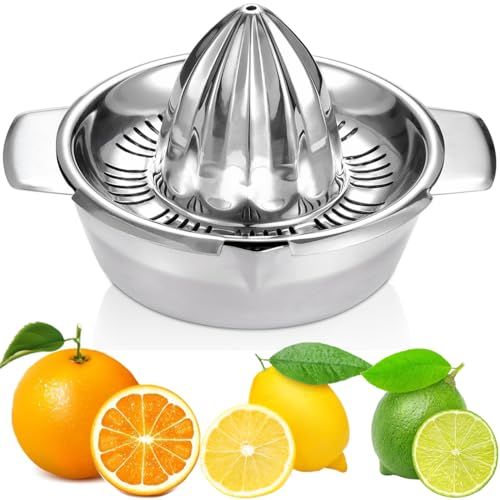
【Sturdy & Efficient】 Manual citrus juicer made of robust 304 (18/8 ) stainless steel, is food-grade, solid, stable and sturdy, anti-rust&anti-citric acid corrosion, can resist prolonged intensive use, much sturdier than plastics. Pointed cone with 11-tooth reamer can extract thoroughly the juice out, help you get maximum vitamins, ideal for daily use to squeeze lemons, key limes, oranges, small grapefruits, madarins, tangerines and other citrus fruits
Forgotten Contributors: Stanley, Steber, and Bennett’s Patents
Three overlooked inventors each made key improvements that brought the lemon squeezer closer to its modern form. Joseph C. Steber’s 1881 hinged-plate press introduced a compact mechanical squeezing action, using a pivot and flat plate to press the fruit. William Stanley’s 1889 foot-powered countertop design pushed the concept toward hands-free operation, with a pedal-driven mechanism mounted on the counter. Arthur J. Bennett’s patents from 1908 to 1909 refined juice handling by adding seed-retaining dams, which improved pouring and prevented clogging. These inventors didn’t create a single breakthrough but made small, targeted adjustments that advanced the design step by step. Their work laid the groundwork that John White later refined into the efficient lemon squeezer we recognize today. Notably, the incremental nature of these improvements mirrors the careful process behind a cold brew can, where each design choice enhances the final user experience. Just as a well-written instruction book clarifies the proper use of each mechanical part, understanding these incremental patents reveals how each lever and dam contributed to a more reliable, user-friendly tool. This stepwise refinement parallels how amber glass bottles protect vanilla extract from light degradation while preserving flavor over time.
How the 1880–1910 Patent Boom Created a Market for Lemon Squeezers
Because over 200 U.S. patents for lemon squeezers flooded the USPTO between 1880 and 1910, you saw the creation of an entire market. This patent surge not only increased the number of filings but also made the tool more accessible. As a result, lemon squeezers shifted from rare, professional gadgets to affordable household staples. The rapid spread of ideas among inventors led to dozens of distinct designs, including lever-based, press-style, and ridged models, each aiming to extract juice more efficiently and with less mess. This era of intense innovation parallels how modern manufacturers now compete on quality and value for everyday kitchen tools like the best 40 oz tumbler with handle. Urban households quickly adopted these compact gadgets, prioritizing speed and cleanliness over multifunctionality. The high volume of patents sparked intense competition, which drove prices down and normalized lemon squeezers as standard kitchen equipment. Just as today’s top kitchen brands use consumer reviews to refine their products, early inventors relied on patent office filings to benchmark performance and durability. Unlike the later design evolution of paper straws, which focused on reducing material waste, the lemon squeezer’s core engineering challenge was maximizing extraction force. By the end of this period, the market for lemon squeezers had matured into a recognizable consumer category, sustained by ongoing innovations and increasing demand.
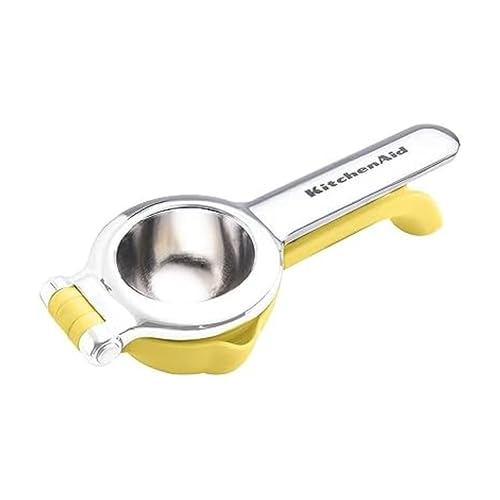
CONTAINED JUICE: A hopper holds the juice inside the citrus press as you squeeze lemons and limes; the built-in spout gives you a way to pour out the collected juice, helping keep squeezing and pouring in one tool

More Juice With a Light Squeeze: The side lever does the work, so this lemon juicer handheld press pulls every last drop from a half. It is a hand juicer that feels at home at the bar and the stove

QUALITY CONSTRUCTION: Crafted with heavy gauge stainless steel for greater strength and durability
From Ceramic to Countertop: How the Lemon Squeezer Evolved
The story of the lemon squeezer begins long before industrial manufacturing, in the hands of Ottoman artisans in Kütahya, Turkey. These artisans crafted hand-thrown ceramic tools designed for making citrus sherbet, often decorated with intricate floral motifs. These early pieces were not mass-produced but each was unique, emphasizing craftsmanship over utility. As time progressed into the late 18th century, there was a noticeable shift towards simpler, more functional designs. Hand reamers appeared, featuring a straightforward shape meant for manual squeezing. Later, one-piece reamers with saucers emerged, designed to sit atop a glass for convenience. By the 1880s, innovations such as glass rims were introduced to improve grip and stability, making the tools easier to hold onto and use. Then, by the 1920s, pressed glass versions became widespread, becoming common countertop items. However, the same essential concept of blending ingredients in a container can be seen in the modern banana smoothie method, which also relies on a kitchen appliance for a consistent result. When cleaning a nut milk bag, using hot water and soap immediately after use prevents residue from hardening and staining the fabric. Unlike the lemon squeezer, the early history of the colander includes hand-thrown ceramic colanders used by ancient Romans for straining pasta. This evolution highlights a move from ornate, handcrafted ceramics to practical, mass-produced citrus tools that are now staples in modern kitchens.
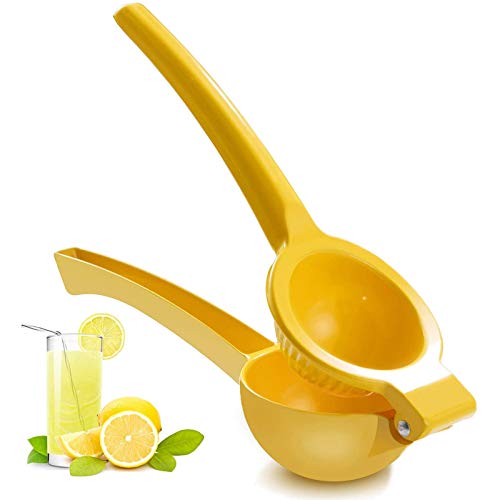
MAXIMUM JUICE, MINIMUM WASTE – This lemon squeezer is designed to extract more juice from lemons and limes with less effort. The deep bowl design helps capture every drop while keeping seeds and excess pulp out of your juice, delivering fresh flavor without the mess.

Product Specifications: Overall Length: 7.28 inches (18.5 cm);Folded Thickness: 1 inch (2.54 cm);Juicer Head Height: 2.75 inches (7 cm)

1.25 x 5 x 2.75 inch
Why No Single “Inventor” Created the Modern Lemon Squeezer
No single inventor created the modern lemon squeezer. Instead, it evolved through a series of incremental improvements made by many hands over decades. More than 200 patents filed between 1880 and 1910 alone reflect a continuous effort to refine the design—each addressing specific issues like leverage, juice drainage, or ease of handling. The shape and features you see today are the result of a collaborative development process, influenced by different cultures and practical needs. For instance, early ceramic versions from 18th-century Turkey adapted to local cooking styles. Even Lewis S. Chichester’s 1860 patent was just a step forward, not the ultimate model. This means your lemon squeezer is essentially a product of collective innovation, built from a tradition of multiple inventors contributing their ideas over many years. This history of gradual refinement parallels how modern appliance designs, such as top ninja slushie machines, evolved through iterative improvements in performance and usability. The same pattern of shared, incremental design improvements appears in kitchen tools like the salad spinner, whose origins trace back to multiple inventors refining rotating baskets and drainage mechanisms over time. Adopting small habits like pre-softening lemons can improve juice yield, similar to how proper preparation enhances blending performance in a portable blender.
The Real History: A Tool Built by Many Inventors, Not One
The evolution of the lemon squeezer is a collective achievement built over centuries, not the work of a single inventor. You can find its origins in 18th-century Turkish clay tools, which were simple devices used for squeezing fruit. Moving forward, Lewis Chichester patented a cast-iron version in 1860, advancing the design with more durability and leverage. Throughout the late 1800s, over 200 patents were filed between 1880 and 1910, each adding subtle improvements like handles, bowls, or levers. Inventors such as Steber, Neal, and White contributed their own modifications, refining the tool step by step. The final product you see today is a mosaic of these incremental innovations, shaped by many hands over time. Similarly, cleaning a garlic press effectively requires regular removal of stubborn pulp to maintain its function and longevity. For thorough maintenance, you should disassemble the lid for deeper cleaning to prevent residue buildup. In the same way, knowing how to say colander in Italian is useful for identifying kitchen tools when following authentic recipes.