
Ever wonder who really invented the modern salad spinner? You might be surprised to learn it wasn’t just one person but a collaboration between two French inventors. Their innovative tweaks over the years are what made the device you use today so practical and effective.
Keep reading to uncover the fascinating history behind this everyday kitchen tool.
Why Soggy Greens Ruin Salad (And How Science Fixed It)
Drying your greens thoroughly is the most effective way to keep your salad crisp. Moisture on the surface clings to delicate leaves, causing them to wilt quickly. Use a clean kitchen towel or salad spinner to remove all visible water after washing. Don’t skip this step—even a small droplet can break down cell walls and make leaves floppy. Chilling the greens beforehand helps slow moisture loss, but removing surface water preserves their firmness longer. The key is to strip away every bit of moisture so your greens stay tender and crunchy without additional gadgets. In fact, the mechanism for removing moisture from greens evolved similarly to how the ice cube tray changed over time to solve everyday kitchen problems. Immersion blenders are unadvisable for this drying task, as they are designed for blending, not spinning, and risk damaging leaves or creating pulp. Understanding different kitchen tools, such as the handheld blending wand, can clarify why each device serves a specific purpose. A completely dry leaf resists wilting, keeping your salad fresh and satisfying with every bite.

Versatile Kitchen Gadget: This 3-in-1 salad greens and vegetable cleaning spinner is a triple threat—washing, drying, and chopping all in one device. Equipped with 5 different blades, it effortlessly slices, shreds, and dices, meeting the preparation needs for a variety of dishes in your kitchen

One-Touch OXO Salad Spinner: Did you know that OXO invented the one-touch salad spinner? Its one-handed pump gives you maximum drying of lettuce with minimum effort

LARGE PREMIUM STAINLESS STEEL BOWL: The salad spinner features a large, practical 5.3 quart 304 stainless steel bowl, ensures durability and a sleek appearance.
The Ancient Trick That Predated Any Gadget
Before the invention of modern salad spinners, the primary method of drying greens relied solely on mechanical techniques. People used simple tools like tea towels or baskets to remove excess water. For example, they would spread the leaves flat on a towel, roll it tightly, and squeeze out the moisture. Then, they would whip the bundled greens overhead, using centrifugal force to fling water away, much like how a spinner works today. This same approach to removing moisture is also essential when cleaning insulated bottles to prevent lingering odors and mould. A particularly clever ancient technique involved twirling greens in baskets. In nineteenth-century Sweden, eaters would spin the greens around their heads, harnessing arm strength to create rotational force. This action pushed water outward from the leaves, mimicking the physics of modern spinning devices. Essentially, this method adapted laundry principles: pressing, whipping, and spinning to dry produce quickly. The key insight is that rapid rotation effectively expels water, a trick that has been used long before any patent or gadget existed. For those seeking modern equivalents, reusable straws offer a similar principle of efficient, durable design for daily use. Interestingly, modern tumblers with handles often incorporate a similar spinning motion for mixing drinks or aerating liquids.
Who Filed the First Salad Spinner Patent?
Jean Mantelet filed the first salad spinner patent in 1971 in France, under the title “salad dryer.” His design used centrifugal force to spin water out of washed greens, forming the basis for what would become the modern salad spinner. This patent is widely recognized as the earliest of its kind in the history of kitchen appliances. While the concept was initially popular in France, secondary sources confirm that similar devices were already in use there before the idea gained broader attention. Similarly, today’s best kitchen tools, like a top tumbler with handle, also rely on thoughtful engineering for quality and value. For those who prefer freshly squeezed juice, the top models often feature powerful motors and efficient extractors. Mantelet’s filing laid the groundwork for future improvements and iterations, but his 1971 patent is considered the foundational design for the salad spinner you see in kitchens today. In fact, just as the 64 oz tumbler stands out as a top pick for its combination of quality and value, Mantelet’s original patent remains a benchmark in kitchen appliance innovation.

Maximum drying power: One-handed pump spins lettuce, herbs or fruit fast with minimal effort. Dry greens quickly with no plugs or cords needed.

Safe Material: All parts of the salad spinner are made of food grade material, keep your ingredients safe and health; It’s an essential kitchen device, also suitable for RV, camping, etc; Top rack dishwasher safe

COMPACT SALAD SPINNER, BIG PERFORMANCE — Small salad spinner packs full-size drying power in a space-saving design. One-hand pump spins lettuce, herbs & greens dry in seconds. Best rated by thousands. Perfect for apartments, couples & small kitchens.
The French Inventor Who Gave Us the Modern Salad Spinner
Gilberte Fouineteau’s 1973 redesign is what fundamentally transformed the modern salad spinner. Her key innovation was removing the central post, which had been the hallmark of earlier designs like Jean Mantelet’s 1971 “salad dryer.” Instead, she introduced a removable basket that sits inside the bowl. This single change made it much easier to lift out dry greens in one piece, simplifying the process and reducing mess. For those curious about the mechanics, the correct part order is crucial for safe reassembly without damage. Fouineteau’s basket-based design also aligned with trends in kitchen aesthetics—favoring tools that are sleek, uncluttered, and less mechanically conspicuous. It allowed the outside of the spinner to look cleaner and more integrated into modern kitchen setups. Plus, this new approach responded to cultural influences: in France during the early 1970s, demand for crisp, well-dried salads was rising, and her design provided an effective drying method that met these new culinary preferences. Without her innovation, the familiar spinner shape and ease of use we know today might never have emerged. For buyers seeking a modern tool, top drink mixers often prioritize similar removable-basket designs for improved performance and ease of cleaning. Achieving a perfect brew similarly relies on mastering tea strainers for clean, leaf-free results.
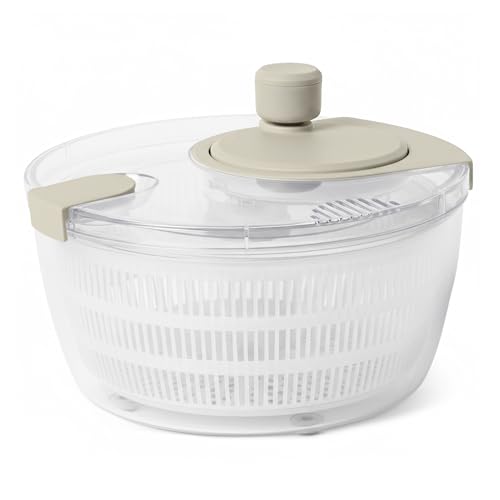
4.2 QUART SALAD SPINNER: 4.2 qt. salad spinner for washing and drying leafy greens and other produce; BPA-free materials

ONE-HANDED PRESS SPIN — A simple push-button mechanism triggers fast, consistent spinning that removes water from greens quickly for perfectly dry salads — a versatile Lettuce Washing Bowl built to last in any kitchen.

Large 6.3 QT Family Size Capacity - Spacious salad spinner bowl holds enough greens for 4–6 servings, perfect for family meals and meal prep. Fits up to 3 heads of lettuce or 2 lb of cherry tomatoes, while the compact design easily fits standard kitchen cabinets
Why Moulinex Brought the Salad Spinner to America
Moulinex brought the salad spinner to America because it had already refined the design for French kitchens, making it a logical expansion. The timing in the mid-1970s aligned perfectly with growing consumer interest in healthier eating and homemade salads. Moulinex didn’t just introduce a new gadget—they promoted a whole kitchen philosophy focused on convenience and efficiency. Their American marketing emphasized push-button ease with the slogan “It’s so simple when you Moulinex it,” positioning the device as a labor-saving “household drying machine” before the term “salad spinner” gained widespread use. Paper straws, for comparison, are often preferred for compostability but can become soggy quickly, while plastic straws last longer but are worse for the environment. For comparison, much like selecting the perfect handle for a 32 oz tumbler depends on fit and comfort, choosing the right kitchen tool requires matching its design to user needs. Initially, the reception was lukewarm, with critics dismissing it as a back-of-the-cupboard item. However, as health consciousness increased, the spinner gained popularity, demonstrating that Moulinex’s early timing, although slightly ahead of its time, ultimately paid off. A lemon juicer can similarly benefit from user-friendly habits like rotating the fruit for maximum yield.

This handy kitchen gadget from Prep Solutions has a 4-quart capacity and the inner basket doubles as a colander

Large capacity, 26 cm diameter. Functional, easy to use and clean. White with red button.
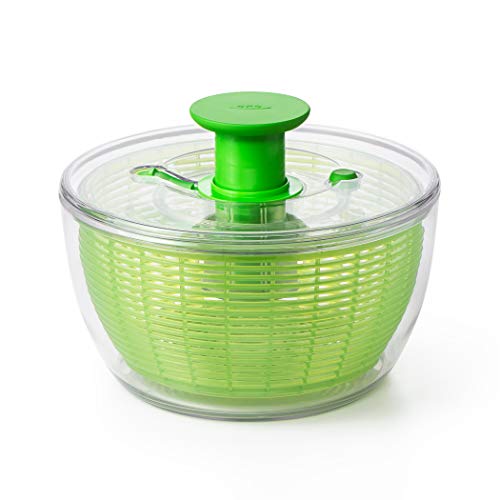
Easy one-handed operation: Spin lettuce, herbs, or fruit fast with the built-in pump—no cords or plugs.
How OXO Turned a Kid’s Toy Into a One-Handed Spinner
OXO transformed a children’s toy top into a highly user-friendly kitchen tool by introducing a pump-activated salad spinner. The key innovation is the one-handed pump mechanism, inspired by the simple plunger press on toys. Instead of traditional crank or pull-string designs, you press the lid’s pump to spin the basket, then stop it instantly with a built-in brake button. The non-slip base ensures the entire unit stays stable during use. This design eliminates the need for two hands or significant grip strength, making it easier for anyone to dry greens efficiently. To achieve the best results, always start at low speed before gradually increasing to avoid splashing. This approach mirrors how the best commercial soft serve machines use innovative mechanisms for consistent performance and ease of operation. For home cooks looking to emulsify dressings, a similar simple mechanical approach can be applied using a whisk or jar to create a stable emulsion, just as one would when making creamy mayo without an immersion blender. The result is a category-defining product that combines playful inspiration with practical ergonomics, all without relying on typical toy components like yo-yos or pull tabs.
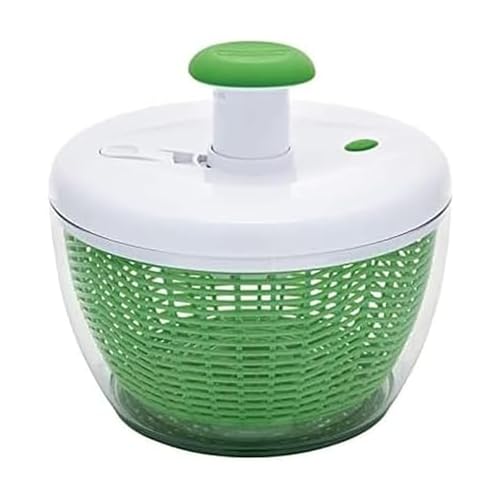
HEALTHY MADE EASY: Our Pro Pump Salad Spinner makes it so easy to prepare nutritious foods every night of the week. This device helps you to clean and serve salad greens and other produce, including fruits and even berries, in seconds!

Safe Material: All parts of the salad spinner are made of food grade ABS material, which makes your ingredients safe and health; Be able to withstand high speed rotation; Top rack dishwasher safe

COMPACT ONE-HANDED SPINNING POWER Designed for smaller portions without sacrificing performance, this 3.8Qt liter salad spinner delivers fast, efficient drying with an easy one-hand press. The smooth pump mechanism creates high- speed rotation to remove excess water from leafy greens, herbs, fruits, and vegetables in seconds. Ideal for quick meals, single servings, or side salads, it keeps produce crisp and fresh with minimal effort and maximum control.
So Which Name Deserves the Credit: Mantelet or Fouineteau?
Both Mantelet and Fouineteau deserve credit for their roles in developing the modern salad spinner — it’s a two-step story. Jean Mantelet filed the first patent in 1971 for a hand-cranked centrifugal salad dryer, which introduced the core concept of spinning salad greens to remove water. His design’s central post, however, limited practical usability because it made cleaning and loading the basket more difficult. By contrast, a lemon squeezer uses a simple pressing action rather than spinning to extract juice, highlighting how different kitchen tools solve similar problems of food preparation. Gilberte Fouineteau’s 1973 patent improved on this by removing the central post, allowing for the removable basket that makes today’s salad spinners easy to use and clean. Mantelet originated the fundamental idea, but Fouineteau’s refinements made it a practical kitchen tool. Both patented innovations played crucial roles in evolving the device, so crediting just one inventor oversimplifies the story. The true credit goes to both, each contributing essential steps to the spinner’s development. For keeping such kitchen tools clean and odor-free, regular maintenance using a fast cleaning routine can prevent mold and buildup.
Why the Salad Spinner Took 30 Years to Go Mainstream
Although the modern salad spinner first appeared in the early 1970s, it took approximately 30 years to become a common kitchen tool. Initially, many Americans dismissed it as a novelty or “kitchen junk” because salads weren’t yet a staple part of meals. Its true cultural impact started to take shape in the late 1970s, when the healthy-eating movement popularized salads as a main course. This shift revealed the need for a quicker, more efficient way to dry greens, making the spinner’s purpose clear.
Design improvements played a key role in its adoption. Early models with a central post felt awkward and cumbersome to use. The breakthrough came when Gilberte Fouineteau simplified the design by removing the central post, making the basket more intuitive. Over time, mechanisms like pull cords and push pumps emerged, enhancing ease of use and ergonomics. The spinner’s widespread acceptance depended not just on invention but on a combination of consumer readiness, usability improvements, and changing eating habits, which all aligned to push the salad spinner into everyday kitchens.
The Surprising Lesson From a Gadget With No Single Inventor
The history of the salad spinner shows that a useful gadget doesn’t need a single inventor. Instead, it evolves through a series of small improvements made over time. Jean Mantelet patented an early version in 1971, which functioned as a basic salad dryer. Later, Gilberte Fouineteau removed the central post, creating the shape most people recognize today. Multiple redesigns, rather than one breakthrough, shaped its final form. This process highlights that everyday innovations often come from collaborative efforts and incremental changes, not sudden flashes of genius. Embracing this shared, messy history helps you appreciate how many handy gadgets develop—step by step, through ongoing improvements.