
If you’re tired of uneven veggie cuts and long prep times, a julienne peeler might be just what you need. It creates thin, matchstick-like strips from firm vegetables like carrots or zucchini in seconds, making slicing quicker and safer.
With its ergonomic design and sharp, stainless steel blades, a julienne peeler is perfect for prepping low-carb noodles, slaws, and garnishes.
Keep reading to learn how to choose the best one and avoid common mistakes.
What Is a Julienne Peeler and How Does It Work?
A julienne peeler is a handheld kitchen tool designed to create thin, uniform strips of produce, resembling matchsticks. It functions with a serrated blade instead of a smooth one, which grips and slices through firm vegetables like cucumbers, carrots, or beets in a single, smooth pull. To use it, hold the produce steady, apply light pressure, and pull the peeler along the surface. The pivoting stainless steel blade moves effortlessly over irregular shapes, producing up to ten 3 mm strips per pass. Its vintage-inspired design adds a touch of classic charm, while the ergonomic grip ensures comfort during repetitive tasks. Compact and easy to wash, this tool is ideal for quickly preparing salads, garnishes, or snacks that require uniform thin strips. Unlike a mandoline slicer, a julienne peeler is generally considered a safer handheld alternative for creating uniform strips without the risk of deep cuts. For those who value durability and smooth operation in their kitchen tools, this peeler’s quality and value make it a reliable choice alongside other well-reviewed gadgets. This tool is also a practical choice for home cooks seeking consistent results, much like using a nut milk bag for perfect oat milk extraction.
4 Practical Benefits of a Julienne Peeler
A julienne peeler provides four practical benefits that make it a valuable tool in your kitchen. First, it significantly reduces prep time by allowing you to create thin vegetable strips in seconds, making it ideal for busy weeknights. Second, it ensures uniform cuts, which enhance the visual appeal of your dishes and promote even cooking, giving your stir-fries and salads a professional look. Third, it improves kitchen safety by minimizing the need for handling sharp knives, reducing your risk of cuts. Fourth, its compact design makes it easy to store, fitting neatly into drawers and saving space. This tool makes incorporating more vegetables into your meals, from raw slaws to quick stir-fries, much easier without requiring advanced knife skills, and it requires significantly less cleaning effort than a bulky food processor. It simplifies healthy eating while saving you both time and storage space. For a consistently smooth beverage preparation, you might appreciate that blue bottle cold brew requires similarly uniform ingredient cuts for optimal extraction. Unlike a lemon squeezer, which is best for citrus extraction, a julienne peeler excels at creating uniform vegetable strips for salads and stir-fries.
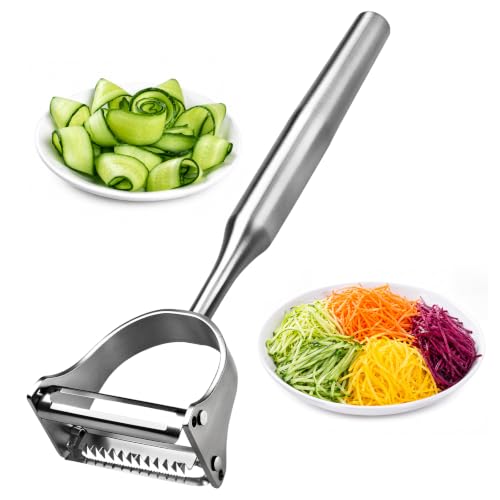
【Multifunctional 2-In-1 Peeler】 This versatile vegetable peeler combines a smooth straight blade for everyday peeling with a julienne blade for creating thin, even vegetable strips. Easily switch between peeling potatoes, carrots, cucumbers, and fruit with this julienne peeler, or shred zucchini and cabbage without changing kitchen tools
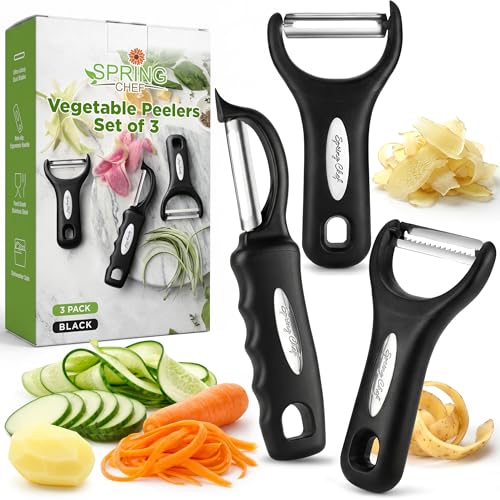
3-in-1 Peeler Set – Swivel, Y & Julienne Peelers - This versatile set includes three essential peelers: a classic Swivel Peeler for smooth vegetables like carrots and cucumbers, a sturdy Y Peeler ideal for potatoes and zucchini, and a precision Julienne Peeler perfect for making veggie noodles or salad garnishes from carrots, squash, or beets.

3-IN-1 MULTIFUNCTIONAL DESIGN — Peel, julienne, and remove potato eyes with one compact tool. The dual-blade system switches easily between smooth peeling and precision julienne slicing — perfect for zoodles, veggie noodles, salads, stir-fries, slaws, garnishes, and everyday meal prep. A smart, space-saving alternative to bulky mandolines and extra kitchen gadgets.
What Can You Make With a Julienne Peeler?
A julienne peeler allows you to quickly create thin, uniform strips from a variety of vegetables and fruits, enhancing both presentation and texture. For example, you can transform zucchini into low-carb noodles in just seconds, perfect for healthy stir-fries or salads. Carrots become ready-to-eat raw strands ideal for adding crunch to dishes or making colorful slaws. Sweet potatoes can be peeled into matchstick-sized pieces suitable for hash browns or baking. For added precision in your prep, a high-performance blender can quickly puree leftover peels into smooth sauces or soups.
You can also julienne peppers and cabbage to ensure even cooking in stir-fries. Citrus peels can be sliced into thin strips to add zest to desserts or drinks, or candy them for a decorative, sweet garnish. Apples and papayas work well for fresh fruit slaws or garnishes, maintaining a crisp texture. When storing julienned vegetables, keep them in an airtight container with a damp paper towel to preserve their crunch. For best results, use a steady, even motion to produce uniform strips without tearing the vegetables. For protein-rich meal prep, consider pairing your julienned vegetables with a shaker bottle with storage to keep dressings or marinades conveniently portable.
This tool turns routine vegetable prep into a quick, professional-looking process, saving you time and effort while opening up new possibilities for salads, garnishes, and cooked dishes.

Sharp, hardened stainless steel blades easily create julienne strips
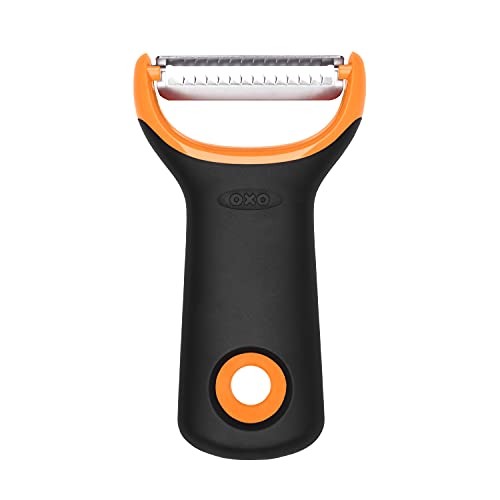
Easily peel precise strips of carrots, cucumber, zucchini and more with the OXO Good Grips Julienne Prep Peeler

【Useful Kitchen Utensils】: AnGeer rustproof stainless steel potato peeler makes peeling vegetables, potatoes, carrots, and more easy with its sharp blade. 3-in-1 dual blade Y peeler & julienne peeler, perfect for creating zucchini noodles (zoodles) and other veggie slices, making meal prep quick and easy.
What to Look for in a Julienne Peeler?
When choosing a julienne peeler, focus on blade quality, handle comfort, safety features, and ease of cleaning. Opt for blades made of stainless steel or high-carbon steel, as they provide durability and resist rust over time. Razor-sharp teeth are essential for creating clean, uniform strips without tearing delicate produce like zucchini or soft carrots. An ergonomic handle with a non-slip grip minimizes hand fatigue during extended prep sessions. A Y-style compact handle offers better control, especially when your hands are wet. Safety features such as blade guards or finger guards help prevent slips and accidental cuts. Look for models that are dishwasher safe and constructed from rustproof materials, with open blades for easy cleanup. Dual-blade options can add versatility by enabling you to cut different strip sizes, making your peeler suitable for various recipes. Prioritize models that balance sharpness, comfort, and safety to ensure reliable performance for everyday use. For those who frequently juice, a high-quality peeler can be paired with a best juicer machine to maximize yield and prepare uniform strips for garnish or recipes.

【2-IN-1 PEELER & JULIENNE CUTTER – ONE TOOL, DOUBLE THE VALUE】This multifunctional vegetable peeler features dual stainless steel blades: a straight-edge blade for effortless peeling of potatoes, carrots, apples, and cucumbers, and a serrated julienne blade for creating perfect matchstick cuts for salads, stir-fries, and garnishes. Switch instantly between peeling and julienne slicing to speed up meal prep without cluttering your kitchen drawers with extra gadgets.

Set Contents: Includes one straight Peeler Knife, one serrated blade, and one diamond sharpening rod complete Peelers for Kitchen prep.

Multifunctional Design:This peeler does regular peeling, scallion shredding, and can open bottles. One handy tool for potatoes, carrots, cucumbers, pumpkin, apples and more fruits & vegetables
5 Mistakes to Avoid (and When to Use a Knife)
Don’t try to julienne the entire vegetable with only a peeler. When the pieces become too small to grip securely, switch to a knife. This not only reduces waste but also enhances kitchen safety by giving you more control. Additionally, ignoring the shape and stability of the vegetable is a common mistake; round veggies tend to slip easily. To prevent this, create a flat side with a knife first, which stabilizes the vegetable and makes julienning safer and more precise.
Finally, know when a knife is the better tool. Dense vegetables like onions or root vegetables, or the last leftover chunks, call for a sharp blade and a claw grip. Using a knife in these cases gives you better control and consistency, helping you achieve clean, evenly sized julienne cuts every time.