
Wondering whether to use a food processor or an immersion blender? It all comes down to the job size and type.
A food processor handles large batches and heavy-duty tasks, while an immersion blender is perfect for quick, small-scale blending directly in the pot.
Keep reading to find out how to choose the right tool for your everyday kitchen needs.
Should You Buy a Food Processor? What It Does Best (And Where It Fails)
A food processor is not ideal for processing tiny amounts. It struggles with small ingredients like a single garlic clove or a few herbs because the bowl and blade are designed for larger quantities. Cleanup can be time-consuming, especially if you only need a quick chop or grind. Additionally, its bulky size takes up valuable counter space, which can be inconvenient if your kitchen is compact. If your cooking routine involves large batches and repetitive prep tasks, a food processor can be a major time-saver. But for quick, small jobs—like mincing a garlic clove or chopping a handful of herbs—it often feels like overkill. In contrast, top garlic presses are designed for precise, small-duty mincing with minimal cleanup and compact storage. For those who also need to transport prepped ingredients, a shaker bottle with storage offers a similar compact and convenient solution. For larger volume tasks like making fresh juice from multiple oranges, a dedicated juicer with high extraction efficiency handles the job without the hassle of bulky blades and bowls.

Maximal Amount & Minimal Pressure - The garlic press has 37 small spikes that match up with the holes in the chamber ideal for maximizing efficient of garlic pressed, whether the unpeeled or peeled cloves, easily crush each clove and push the garlic through fine holes to produce a ready-to-use paste, while the peels conveniently remain inside the inner chamber

Garlic Press with Built-In Cleaner: This garlic mincer has a large-capacity chamber that crushes multiple garlic cloves at once for faster prep. Store it with prep tools for kitchen organization

★ OUTSTANDING & LONG-LASTING QUALITY: This heavy duty garlic press, which will last for decades, is made of solid, high quality zinc alloy, and ergonomically designed. It’ll be your favorite kitchen gadget. It’s rust free and dishwasher safe.
When an Immersion Blender Wins Out (And When You Should Skip It)
An immersion blender is best suited for small, wet batches and hot liquids rather than dry or chunky ingredients. It excels at creating smooth purees, emulsions, and sauces directly in the cooking vessel, saving you time and cleanup. Typically, it works well with amounts up to about 4 to 5 cups of liquid or food. When handling larger volumes or dry ingredients, the motor may struggle or produce uneven results. For a consistently smooth puree, a high-quality salad spinner is not the right tool, but for comparing quality, performance, and value in kitchen gadgets, reviews of top picks can guide your choice. For example, a dedicated review of best pink tumblers highlights similar criteria for choosing a reliable drinkware option. If you lack a citrus juicer, easy workarounds like using a fork or your hands can extract orange juice effectively.
Avoid using an immersion blender for chopping vegetables; a food processor provides more consistent, uniform cuts and is designed for that purpose. Likewise, don’t rely on it for kneading dough, as its motor and blades aren’t built for heavy, stretchy mixtures. Instead, reserve the immersion blender for blending hot liquids, making emulsions, and small wet preparations, keeping your tasks efficient and your results smooth.

No More Lumpy Chunks: Equipped with a strength 1100W full copper motor, providing for several times significantly stronger blending and chopping capabilities in seconds to create velvety smooth puree results

LICENSED MASTERCHEF PRODUCT - This professional quality handheld stainless steel stick blender is a licensed product of MasterChef the TV Series.

THE GLOBAL #1 HAND BLENDER BRAND*: Experience the precision of German engineering. The MultiQuick 515 puts the power of a durable 500-watt motor into a slim, ergonomic 3-in-1 immersion blender that’s easy to handle. *Source: Independent Research Institute, Sales Leader Full Year 2024
Does Batch Size Decide the Winner? How Volume Shapes Your Choice
A processor is better suited for large volumes, while an immersion blender works best for smaller quantities. For loose mixtures or recipes that require chunky or textured results, the immersion blender shines. If the volume exceeds one safe load for the processor, its efficiency diminishes quickly. Use the immersion blender for modest liquids or small batches, typically up to a few cups. For tasks requiring a touch of portability and steady temperature control, a 40 oz tumbler with handle offers excellent value. When dealing with higher volumes and ingredients that don’t need to be fully blended but rather mixed or roughly chopped, opt for the processor. This ensures quicker, more uniform results without risking overloading your appliance. For those seeking a dedicated appliance for smaller jobs, top personal blenders offer great performance and value for single-serve drinks and smoothies. If you are bottling fermented drinks, choosing the best bottles can prevent carbonation mishaps.

Turn Your 40 oz Tumbler Into a Blender: Use your favorite 40 oz tumbler instead of buying another cup. This innovative blender base is designed for tumbler users who want fresh smoothies anytime.

【Post-Workout Protein Shakes in Your Tumbler】After the gym, add milk or water, 1 scoop of protein powder, half a banana, a few berries, and small pre-cut frozen fruit to make a smooth protein shake directly in your compatible 30oz or 40oz wide-mouth tumbler.

2-in-1 40oz Tumbler Blender: Enjoy blending and drinking in one convenient design! This portable tumbler blender includes a large 40oz (1.18L) handled cup, allowing you to blend smoothies, protein shakes, fruit drinks and more directly in your tumbler. The detachable blending motor also works with select Stanley 40oz cups featuring a compatible 3.9-inch opening.
Which Tool Is Quickest to Clean and Store? A Side-by-Side Comparison
The immersion blender is the quickest to clean and store. Rinse its shaft in seconds and wipe the motor with a damp cloth—no disassembly required. Some recommend blending soapy water to clean the blade area, which simplifies maintenance. In contrast, a food processor requires washing multiple parts, including the bowl, lid, feed chute, blade, discs, and pusher. This process takes longer and involves more effort to dry and reassemble. Similarly, a stuck blender lid can be avoided by following proper assembly and cleaning techniques. For users who value convenience, the immersion blender’s easy cleanup is reminiscent of the minimal maintenance needed for a Blue Bottle cold brew can, which only requires a quick rinse. Adopting the same simple rinsing habits used for a lemon juicer can further speed up after-use care.
For storage, the immersion blender’s slim shaft and separable cup allow it to fit easily in a drawer or cabinet. Its main body is compact and unobtrusive. The food processor, however, has a large bowl, lid, and numerous accessories that demand dedicated shelf space. Its parts are often stored separately and can be misplaced easily. The blender’s simple design minimizes clutter and lost pieces. Overall, if quick cleaning and space-saving storage are priorities, the immersion blender clearly outperforms the food processor.

POWERFUL BLENDING: Meet the New Turelar Series Hand Blender! With high-torque copper motor for exceptional power and durability, this immersion blender effortlessly blends or purees ingredients in seconds. Get smooth and consistent results every time—perfect for smoothies, soups, baby food, etc.

1000W Motor & 304 Stainless Steel 4-tip Blade: Compared with other 300-500W motors, upgraded KOIOS handheld blender is equipped with a 1000W all-copper motor, which is more powerful and has a stronger ability to crush food. With 304 food-grade stainless steel blades, this material has good oxidation resistance and high temperature resistance. Safe to use even in hot soup.

The Big Overlap: When Both Tools Can Handle the Same Job
Both tools can produce semi-smooth to smooth purees, dips, or emulsions, but their strengths differ depending on your needs. An immersion blender is ideal for blending directly in the pot, making it quick and convenient for hot liquids like soups, sauces, or dressings without transferring or cooling. It handles small batches well, such as mayonnaise or aioli in narrow containers. A food processor offers more control with its pulsing action, reaching a paste-like consistency perfect for hummus or thick dips. It’s better suited for larger batches and tasks that require more precision, like chopping or slicing. When choosing between them, consider batch size and how much control over texture you want. Both are capable of emulsifying vinaigrettes and similar blends, but they overlap mostly when working with semi-smooth to smooth textures rather than chunkier or finely sliced ingredients. For cold beverages, a glass pitcher with infuser can also efficiently blend fresh flavors directly in the serving vessel. Proper cleaning of straw lid parts is crucial to prevent mold buildup in hard-to-reach crevices. Similarly, using a cocktail strainer after shaking drinks helps remove ice chips and herb fragments for a cleaner pour.
How to Pick the Right One Based on Your Most Common Recipes
If your most common recipes involve extensive chopping, slicing, shredding, or making dough, a food processor is the best choice. It quickly handles thick mixtures like nut butters and pesto, and can bring dough together in under 90 seconds. Your cooking habits should guide your decision: if you frequently prepare soups, an immersion blender is more suitable; if vegetable prep or baking dominates your kitchen time, opt for a food processor. For smooth soups, you must understand proper speed and motion to avoid splashing. Matching the tool to your routine will help you save time and reduce effort.

Process tougher ingredients and mince meat with the improved four blade multipurpose blade design - minces meat in 10 seconds (Based on 500g chicken, beef and pork).
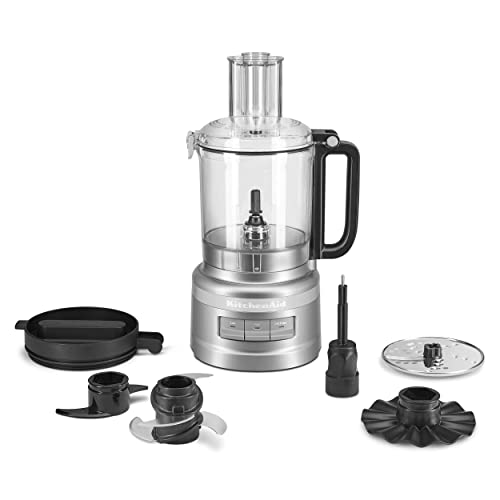
Process tougher ingredients and mince meat with the improved four blade multipurpose blade design - minces meat in 10 seconds (Based on 500g chicken, beef and pork).

POWERFUL PERFORMANCE: Equipped with a 1000-peak-watt motor, this Ninja food processor effortlessly handles tough ingredients, ensuring smooth and consistent results every time.