
Wondering if metal straws are truly better than plastic? The answer depends on how often you use them and how you care for them. Metal straws can be environmentally friendlier if you use them daily and rinse with cold water.
But most of their impact comes from washing rather than manufacturing. Keep reading to see how your habits influence which option is best for you.
What Science Really Says About Metal vs. Plastic Straws
Metal straws are not perfect but do offer notable advantages. They are PFAS-free, unlike many plastic straws that often contain these long-lasting chemicals. Being durable and fully recyclable, they reduce environmental waste over time. However, safety concerns are significant: a recent emergency-department study found that metal straws cause more injuries than other eco-friendly options, mostly from accidental pokes during use. Doctors recommend avoiding them for children to prevent injuries. Ultimately, choosing between them involves weighing lower chemical exposure and less waste against a higher risk of physical harm. For those who prioritize reducing chemical exposure, the best freezer bowl for a Cuisinart ice cream maker offers a PFAS-free alternative for frozen desserts. The science clarifies the costs but leaves the decision in your hands. For a different container choice, wide-mouth glass bottles offer excellent quality and value for storing beverages. To ensure your reusable straw lid stays hygienic, the most effective method is using a small brush to clean your modern straw lid after each use.
The 3 Trade-Offs That Decide if Metal Straws Are Worth It
The trade-offs of metal straws highlight whether they are truly worth it for you. First, the upfront cost is significantly higher—ten to twenty dollars compared to just fractions of a cent for plastic straws. This initial investment makes sense only if you plan to reuse the metal straw many times, which means the eco-friendly benefits become a long-term commitment. If you only use a straw occasionally, the cost may outweigh the environmental gain. For comparison, some reusable options like GE personal cup blenders offer better overall portability and durability for daily use. Similarly, the top wine tumblers reviewed provide an alternative that prioritizes comfortable drinking experiences for specific beverages. In contrast, an immersion blender for soap making requires careful cleaning to avoid residue buildup, which is not a concern with straws.
Second, portability is less convenient. Metal straws tend to be heavier and less flexible than disposable plastic ones. To take them on the go, you’ll need a protective case, making them less practical for quick trips or tossing into a bag compared to the simplicity of plastic straws.
Third, user comfort can be affected. The hard edges of metal straws and their rapid heat conduction can make hot drinks uncomfortable to sip and pose safety risks if teeth are chipped. While they perform well with cold beverages, these comfort issues restrict when and where you might want to use a metal straw.

【Premium Material】These drinking straws are made of GENUINE premium, silver-colored 18/8 stainless steel.Unlike other cheap straws with low weight and bent easily, our straws have thicker walls, so that they are very strong, not too heavy nor too light.

【Telescopic & Convenient】This reusable collapsible straws can easily change length from 3.94" to 9.25", fit for 10-30 oz cups and tumblers, Each metal straws comes with different color soft silicone tips, so it won't be mixed, what’s more it can protects teeth and lips from extremely hot and cold drinks

Sturdy and Reusable: Reusable metal straws are made of food-grade 304 stainless steel, which can prevent scratches, rust.replacing disposable straws and plastic straws for easy on-the-go travel,reduce pollution!
Why Dishwashing Matters More Than Making the Straw
Your washing habits have a bigger environmental impact than how the straw is made. Over 85 percent of its annual footprint comes from cleaning rather than manufacturing. Lifecycle analysis shows that choosing the right cleaning method can cut your impact more effectively than selecting a different material. For example, the same principle applies to milkshake makers, where efficient cleaning techniques dramatically reduce energy use compared to lengthy wash cycles. Hot water or long wash cycles significantly increase energy use, while cold water and quick rinses lower it. Running a dishwasher half-full or washing excessively can wipe out the benefits of reusing a straw. This mirrors how choosing a well-designed Owala tumbler with handle can optimize reuse and reduce unnecessary cleaning waste. Choosing a durable 40 oz tumbler with handle similarly ensures long-term reuse while minimizing cleaning-related energy consumption. Your daily habits — how often and how efficiently you clean — are what truly matters in reducing your environmental footprint.
How Many Uses Before a Metal Straw Beats Plastic?
You need to use your metal straw at least 37 times before it becomes greener than a plastic one in terms of carbon footprint. This break-even point varies depending on how you clean it and which environmental impact you prioritize. For example, heavy washing with hot water or long cycles can significantly raise the total impact, pushing the number of uses required higher. Stick to quick, cold rinses, and you might reach this point around 40 to 70 uses. If you use the straw daily, hitting the break-even faster is feasible, but occasional use might mean sticking with plastic is more eco-friendly. To truly offset the initial carbon debt of manufacturing, aiming for at least 150 uses provides a safer margin. For instance, readers choosing a pink tumbler with straw may prefer a metal option for durability, but the straw’s environmental payoff still depends on consistent daily use. For those who bottle their own beverages, reusing a metal straw aligns with the same sustainable practice of selecting durable kombucha bottles for long-term home brewing. Similarly, choosing a shaker bottle with storage ensures that your on-the-go mixing and storage needs are met without relying on single-use plastics.

Eco-Friendly Solution: Switch to our metal straws, a sustainable choice over disposable plastic. Crafted from durable stainless steel, they're stylish and versatile for any drink, embodying eco-conscious living with each sip

Top 18/8 stainless steel material: This metal straw is made of top food grade 304 stainless steel material. Non plastic, no metal aftertaste, BPA free, lead free, dishwasher safe. Reusable straws can reduce environmental pollution from plastic straws, they are more environmentally friendly.

12 reusable stainless steel straws with 2 brushes: 6 straight and 6 bent, in 8.5 inch and 10.5 inch lengths with a 6 mm (0.24 in) bore, plus 2 cleaning brushes and a cotton travel pouch
Where Plastic Straws Win and Lose
Plastic straws are cheap, with costs often below a few cents per unit, making them easily accessible and convenient for quick use. Their flexible feel suits many users, especially those with swallowing disabilities who rely on them for easy drinking. You can often find them in almost any food or beverage establishment, highlighting their widespread availability. For creative minds, they offer opportunities for DIY projects or art, though their aesthetic appeal remains purely utilitarian. However, their environmental impact is significant. They frequently end up in beaches and oceans, breaking into tiny microplastics that threaten wildlife and ecosystems. Recycling them is practically impossible because their small size makes sorting unfeasible, leading most to landfills or just littering. Public opinion has shifted strongly against them, with bans and restrictions increasing worldwide presence. Their production relies heavily on fossil fuels, contributing to emissions and climate change. While convenient and inexpensive, using plastic straws comes with a heavy environmental price. A similar struggle with mixing convenience versus waste can be seen in using a blender to prepare a powder-based drink without a disposable container. In contrast, a homemade milkshake in a blender offers a reusable alternative that avoids single-use waste entirely. Choosing the right cocktail strainer can also help reduce the need for single-use plastic straws in home bartending.

【THE PERFECT FIT FOR 16OZ- 30OZ TUMBLERS】 10.5 in long, 0.3 in outside diameter and 0.22 in inside diameter. Designed as replacement straws for most 16 oz, 20 oz, 24 oz, 30 oz and 32 oz tumblers like Starbucks, Stanley Quencher H2.0 40 oz & 30 oz, Yeti Rambler, Simple Modern, Owala, and other travel mugs. Say goodbye to too-short or flimsy straws—these premium straws bring a seamless, snugly-fit, and upgraded look to your favorite daily hydration cups without sliding around. Please check your lid opening before purchase.

Product Includes - 24 pcs multi colored reusable plastic straws and 4 straw cleaning brushes. 12 colors - red, light red, orange, yellow, green, light green, blue, light blue, purple, light purple, gray, transparent

100% Bamboo Eco Friendly Straws: This 10 pack of 8 inch durable, ethically processed bamboo reusable straws are hand washable or dishwasher safe, lasting months and offering a sustainable alternative to single-use plastic straws and non-biodegradable options
What Happens When You Throw Away a Straw?
When you throw away a plastic straw, it doesn’t simply disappear. Instead, it usually ends up in a landfill or an incinerator, not a recycling bin. Recycling facilities face challenges with straws because they are tiny and lightweight, making them hard for machines to sort. Additionally, leftover liquids contaminate the recycling process, leading most straws to be rejected. Plastic straws do not biodegrade like organic materials; they either persist in landfills or break into microplastics. In low-oxygen landfill conditions, they tend to fragment into small pieces that can drift into the environment, potentially lasting up to 200 years. Paper straws aren’t a perfect solution either, as they often do not fully compost in such environments. If incinerated, straws transform from waste into air pollutants, and some may escape into oceans, posing threats to wildlife. Understanding how a drink mixer works involves similar concerns about waste and materials. Essentially, throwing a straw away does not make it vanish; it continues to impact the planet in various ways.
Should You Switch to a Metal Straw? The Honest Verdict
If you use a straw daily, switching to a metal one is worthwhile. Metal straws are durable and can last for years with proper care, making them a cost-effective alternative to single-use plastics over time. A single stainless steel straw can replace hundreds of disposable ones, reducing waste significantly. However, keep in mind that initial costs are higher—metal straws tend to be more expensive upfront. Plus, recycling small metal items like straws can be a challenge since many curbside programs don’t accept them, so they may still end up in landfills despite being recyclable. However, be aware that metal straws pose safety risks such as tooth damage and choking hazards if bitten or dropped. If your straw use is infrequent, investing in a metal straw might not be justified; the environmental benefits are more noticeable when used regularly. For those who prefer a more decorative option, glass straws with charms offer a stylish and reusable alternative. For daily iced coffee or smoothies, a metal straw can be your best long-term choice—just make sure to keep using it consistently. For those who prefer a hot beverage, pairing a metal straw with a ceramic tumbler with lid provides an insulated, durable, and reusable drinking experience.
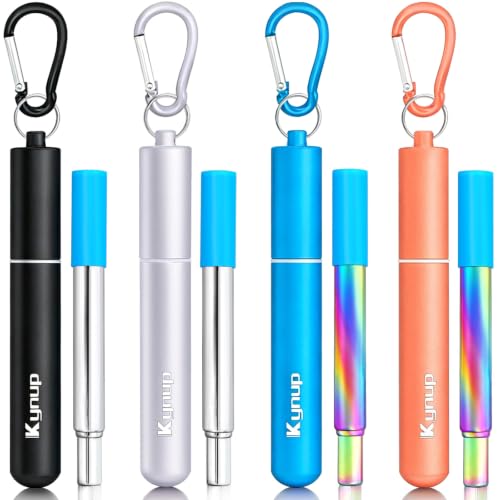
【20PCS Included】 This 4 Packs metal reusable straws includes 4 stainless steel straws, 4 cases, 4 keychains and 4 silicon pieces. Portable to use.

Perfect for 40oz 30oz Tumbler: Long is 12in ,wide is 3in.Designed to compatible with the Stanley Quencher stainless steel tumbler (H1.0 and H2.0), Compatible with Stanley 40 oz 30 oz tumbler, and other 40 oz tumbler, these straws provide ample length for all your drinking needs

16 STRAWS + 2 CLEANING BRUSHES – Includes 8 straight and 8 bent drinking straws in four sizes, plus 2 long cleaning brushes for everyday use with 20 oz and 30 oz tumblers.